Sports Stadium Roofing: How Stadium Roofs Are Built, Step by Step
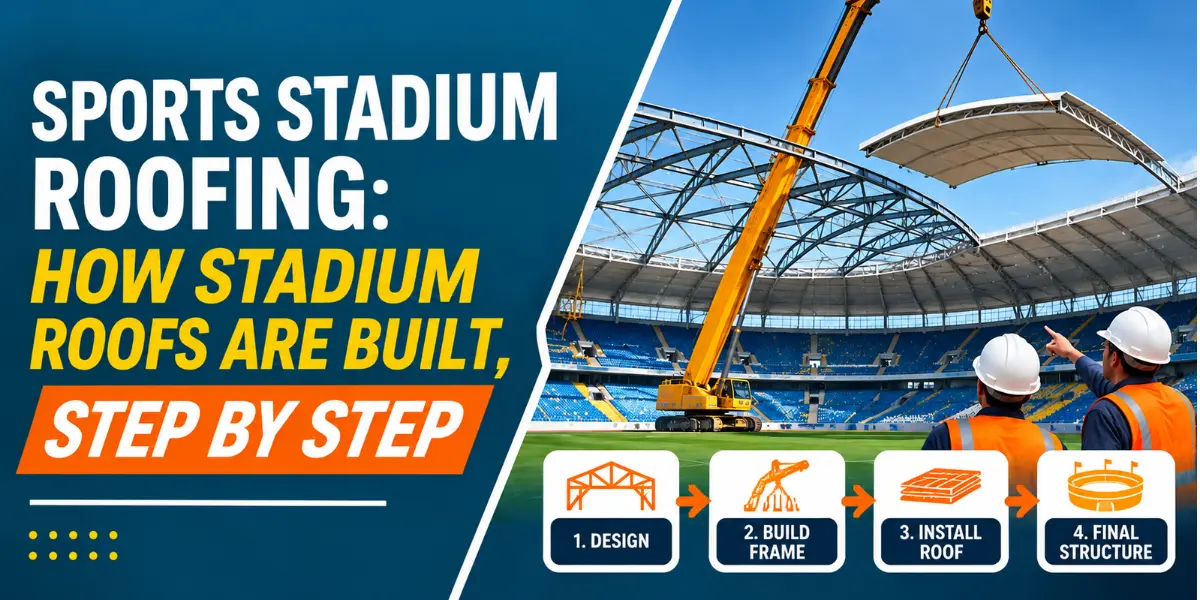
Every big game depends on something most fans never look at: the roof. A stadium roof keeps spectators dry, shades the stands, protects broadcast and lighting gear, and has to survive Australian sun, wind and storms year after year. This guide explains how a stadium roofing project works, from the first inspection to long-term care, in plain language.
Why the Roof Matters for Fans, Players and Clubs
- A stadium’s roof provides more than a ceiling; it creates an atmosphere for each game. When done properly, the roof can enhance the overall experience at the stadium.
- Shields crowds from rain, heat and UV during long games and tournaments
- Reduces glare and helps manage noise and crowd comfort
- Protects seating, scoreboards, lighting rigs and media areas from water damage
- Keeps concourses and walkways safe by draining water away quickly
- Helps clubs avoid costly postponements and emergency repairs
Similarly, the same is true of smaller venues. For example, a local football club’s grandstand, a school sports hall and/or a council operated cricket pavilion will require a roof designed to withstand extreme usage and severe weather conditions.
Common Types of Stadium Roofing
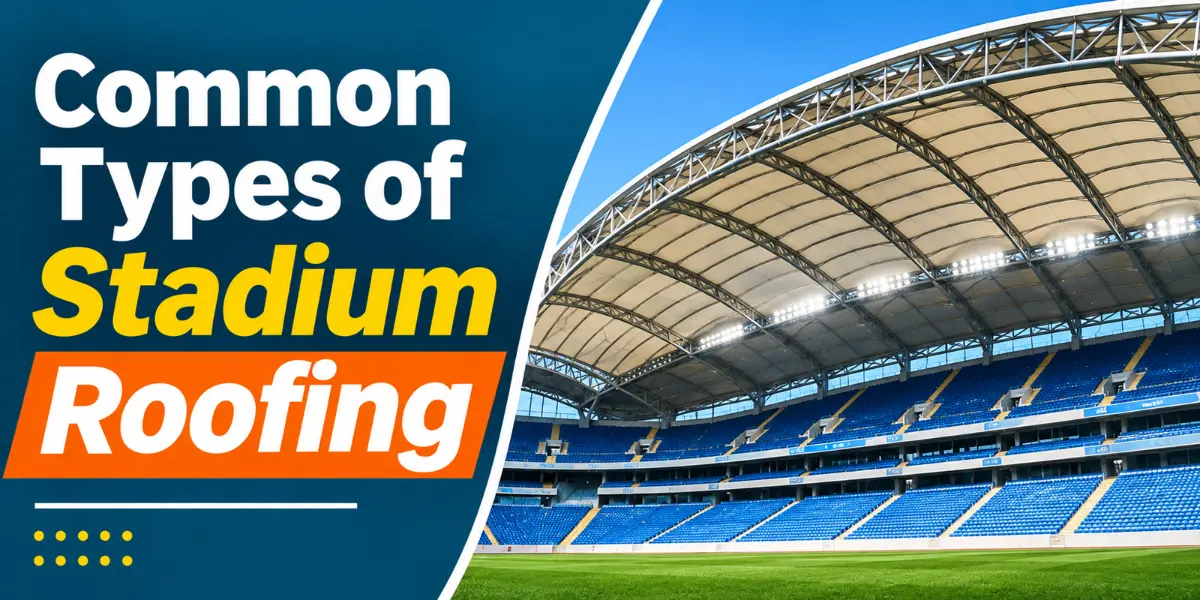
The type of system that would work best for your facility depends on the physical characteristics of the space (size and shape), the amount of money available to spend on a new sound system, and how the facility will be utilized. Most likely, you will find these types of systems:
Steel sheet roofing (such as Colorbond) Steel sheet roofing (e.g., Colorbond). A strong, lightweight and long-lasting material that is often used on grandstands and large covered areas.
Insulated metal panels Insulated metal panel system. Best suited for interior use within stadiums, arenas and sports facilities requiring environmental control (temperature) as well as acoustic reduction (sound).
Membrane roofing Membrane roofing. Used on flat or low-pitch sections of a roof where a watertight and seamless surface are needed.
Translucent panels Translucent paneling is used to allow natural light to enter into covered seating areas and concourses, therefore allowing for reduced usage of daytime lighting.
Retractable or partly open designs Retractable or partly open designs, which can be found in some of the larger stadiums, require the expertise of an engineer and are much more complex than the average roofing installation.
In most club, school and community settings, the use of either steel sheeting or insulated panels will be a practical, budget-friendly option.
What Makes Stadium Roofs Harder Than Normal Roofs
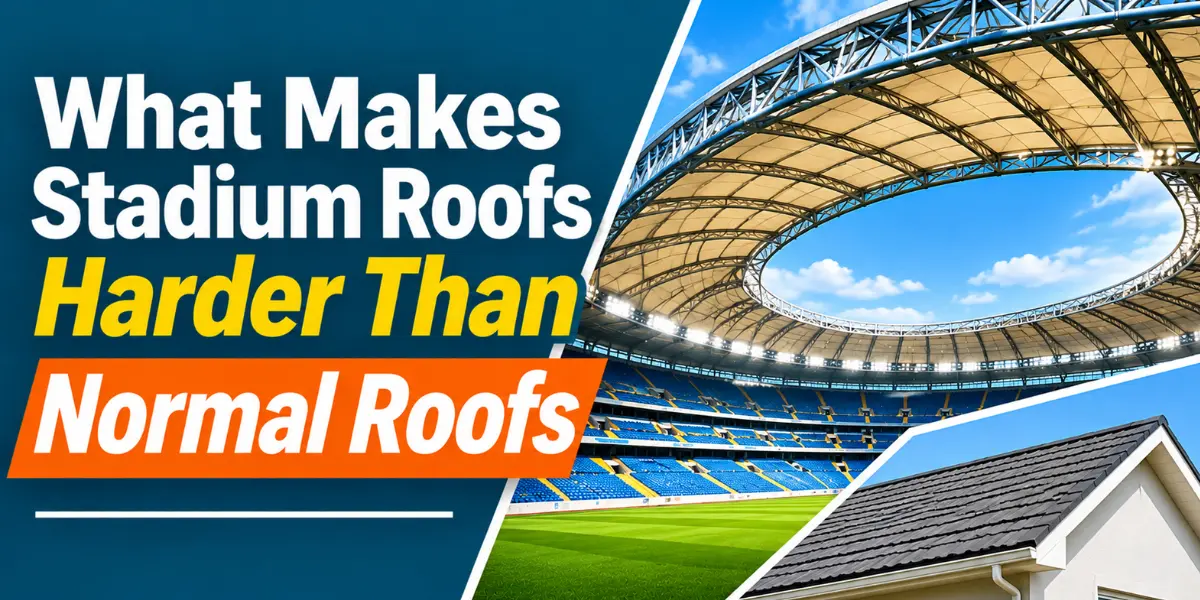
A stadium roof isn’t just a larger version of a home roof. The problem with the stadium roof is that it has many more issues than the home roof. These issues help determine how the job will be done.
Size and span The grandstand’s size and span will be supported by a steel frame which will provide the necessary support for the roof. A grandstand roof is generally very large, with no intermediate support, so the steel frame must bear the weight of the roof without bending or flexing. If there are any movements within the structural system, even if they are minor, it could cause the sheet metal and/or flashing on the roof to separate over time.
Australian weather Australian weather conditions have a strong ultraviolet (UV) component, as well as extreme heat during the summer months, and sudden storms with large hailstones that are extremely damaging to open venues. In addition to these environmental factors, coastal venues must cope with the salt present in the air that accelerates corrosion of the fixing devices used in construction and any exposed steel. Therefore, when selecting materials for use in an outdoor venue, they must be selected based upon both their ability to resist corrosion and their thermal performance characteristics for the specific geographic region in which they will be installed rather than simply selecting the least expensive material.
Heavy use and public access A lot of people using the space (stadium roof) and having access to it. Thousands of individuals will be sitting, walking around, and gathering together under the stadium roof. When there is either a leak in the roof above the seating areas, or if there is a loose sheet on the roof, it isn’t only a maintenance headache, but also a safety hazard and a negative image for the club/venue.
Access and logistics – in many cases, crews will need access to cranes, lift platforms, and staged materials. Additionally, they must operate in areas where turf, seats, scoreboards, lighting and media equipment can’t be moved or subjected to dust/water.
Fixed event calendars Events with fixed dates. Tournaments, community events, and fixtures are never rescheduled due to roofing work. Therefore, you will need to plan carefully, set reasonable time frames for each task, and hire a roofing professional who can communicate clearly when plans must be altered.
The Stadium Roofing Process, Step by Step
- Inspection and evaluation. A professional roofer will inspect the sheathing or membrane, the steel structure, flashing, fasteners, gutters and drainage systems. The roofer will search for signs of rusting, leakage, loose fasteners and previous repairs. Based on this inspection, the roofer will determine if the roof requires repair, restoration or complete replacement.
- Design and material selection The selection of the design of the roof, as well as the materials to be used in its construction, are made with several factors in mind. These factors include: the pitch (slope) of the roof; the potential wind loads that will affect the roof; the local climatic conditions; the financial constraints of the project; and any relevant building codes or regulations. It is essential that high-quality materials from reputable manufacturers are used in this process, as the quality of the roof itself is directly related to the quality of the components holding the roof together.
- Quoting, approvals and scheduling A written, itemized quote is provided initially. Larger projects may require approval from local government (council) or the construction authority, a safety management plan, and evidence that you are licensed and insured. After these steps have been completed, you can schedule your work based on the sports season, typically in the off-season or when no events occur on the field.
- Site preparation and safety setup. Crews will be setting-up scaffolding, edge protection and lifting equipment; fencing-off the work zones, and protecting the seating, turf and equipment below.
- Replacing the old roof. When you are replacing your old roof, the old sheets and fixings will be removed in layers. This allows for only a short period of exposure to the elements for a small portion of your roof. During this time, damaged purlins and framing will be identified and marked for repair.
- Structural repairs and underlay Structural repair and installation of underlayment. Prior to placing anything on top, all corroded or damaged structural members are repaired. Underlayment, sarking or insulation is then placed to manage moisture and heat.
- Installing the new roof The installation of your new roof begins when sheets or panels have been put down in a sequential manner. Each sheet/panel has been secured to the rafters with the appropriate type of fastener that will withstand the winds in your area. Next, you will have ridge caps, flashings, gutters and downpipes installed. All of these components have been designed to handle the drainage needs during periods of extreme rain.
- Quality check and hand-off. Fixings, sealing and flashings are checked for quality, water flow is checked, and the client does a final walk-through. Photographs and warranty documents are provided.
Safety and Compliance on a Stadium Roofing Job
- Roofing over public spaces requires special care and safety precautions. A typical professional crew will usually have:
- A site-specific safety plan and work method statement prior to any person walking on the roof.
- Fall Protection Systems Include: – Guardrails – Edge Protection – Safety Harnesses – Secure Anchor Points
- Keep the areas below where you are working free of people, vehicles, and equipment so they will not be hit by falling items.
- tradespeople who are licensed, currently have public liability and workers’ compensation insurance.
- Appropriate disposal/management of used materials that may require special handling in accordance with local regulations.
Repair, Restoration or Replacement?
The selection of whether or not a stadium roof should be removed is based on the findings of an inspection.
Repair Repairing problems with roofing is often done on a case-by-case basis. Repairing roof can involve fixing a few loose/damaged sheets, repairing/replacing damaged flashing(s) and/or finding and fixing a single leak.
Restoring a building’s roof with its existing structure intact and its surface worn down is logical. This could involve cleaning, re-attaching, re-sealing, and re-coating the roof to prolong its lifespan.
Replacement Replacement is the preferred alternative when there is extensive corrosion, the roof keeps leaking at several locations, and/or there have been many attempts to repair the same area of the roof. When you reach this stage, it will often cost more money to continue repairing your roof than it would to begin over again.
The most reasonable way to choose between the two options would be to have a professional contractor explain why each option is best for your roof, as opposed to just giving you a price quote for the more expensive of the two jobs.
What Affects the Cost and Timeframe
Because each venue is unique, there isn’t one universal price for stadium roofing. Some of the most significant variables in determining costs include:
- The size and level of difficulty of your roof. Larger, curved or multi-level roofs will require more materials and labor.
- The choice of materials. Steel sheets, insulation panels and membrane systems vary in both cost and durability.
- Condition of the structure: damage and rusting of framing will need to be repaired prior to installation of the new roof.
- Access requirements. Cranes, scaffolding and lifting platforms add to the cost.
- Scheduling. Working around events, or fitting a task into a small “off-season” time frame will have an impact on cost and when you can get the job done.
- Weather. Rain and high winds can pause work, especially on exposed grandstands.
The time required to complete each project can range from several days when completing a minor repair to multiple weeks or more when replacing the entire roof of a very large building.
In most cases, the best way to determine the approximate cost and duration of the project is through an initial on-site inspection of the area to be worked upon, and then providing you with a formal, written quotation that includes a detailed list of all materials needed to complete the job along with a realistic estimate of the amount of time it will take to complete the work.
Why Drainage and Wind Resistance Get So Much Attention
A great deal of water is shed from a large roof during a brief period of rain. Water will back up when gutters and down pipes are too small for the volume of water being shed, overflow onto walkways and seating areas, and may also be forced under the roof sheeting.
The second biggest danger is wind. The open grandstands are essentially large sails that can catch the wind in a storm. Therefore, it’s very important to use the proper fixings, overlap the sheets properly, and make sure you’re paying attention to the edges. Most stadium roof damage occurs from failure of flashings, joints, and fasteners and not from damage to the individual sheets.
Keeping Matches on Schedule
- Safety and downtime are the two main concerns of a venue manager. A great contractor should do the following:
- Plan work around your season so the venue is ready for the first fixture
- Stage the work in sections so parts of the venue stay usable where possible
- Keep spectators, players and staff well away from work zones
- Tell you before acting on anything unexpected found once the roof is opened up
Maintenance: Protecting the Roof After the Job
Even a new roof needs regular care. A simple stadium roof maintenance routine includes:
- Inspections once or twice a year, and after major storms or hail
- Cleaning gutters, box gutters and downpipes, especially near trees
- Checking for loose fixings, rust, cracked seals and worn flashings
- Fixing small problems early, before they become leaks or structural damage
The cost of the same event location with scheduled maintenance is much lower than what would be spent on emergency repairs during the season.
How to Choose a Stadium Roofing Contractor
Before you hire a roofing contractor for a sporting venue, ask:
- Are you a licensed professional and have you obtained all necessary insurance (including public liability and worker’s compensation)?
- Have you worked on large commercial or public venues before?
- Will I get an itemised written quote before work starts?
- What materials and warranties are included?
- How will you manage safety around spectators, players and staff?
- Do you offer ongoing inspection and maintenance after the job?
- If you get a clear answer to your questions, this is a good sign. If you get a vague answer or if they pressure you to sign up right away, then this is not a good sign
Frequently Asked Questions
How long does a stadium roof last?
The lifespan of a metal roof varies depending on several factors including the type of material, the application of coatings, the climate in which it will be used, and the quality of maintenance. If you have a properly installed metal roof and perform regular inspections, your roof can last for many years. However, if you neglect your metal roof, it could fail early.
When is the best time to do roofing work on a sports venue?
Normally, this is during the off-season or in between major events. By planning ahead, contractors have ample opportunity to obtain materials, plan for accessibility and establish schedules for their crews prior to being rushed.
Can part of the venue stay open during the work?
Oftentimes, yes. If work is done in parts and you have set up a safe exclusion zone and walking area (as per agreement prior to starting the work) then part of the building will still be accessible.
Is Colorbond suitable for grandstands?
Because of its strength, relative weight, and suitability for Australian weather conditions, Colorbond steel is commonly utilized on commercial and athletic facilities. Depending upon the design of the facility, wind loads, and available resources, the suitability of Colorbond steel for a particular venue will need to be determined at the time of an initial site visit.
What are the warning signs that a stadium roof needs attention?
Inspect for signs of leaks (water stains, dripping during rainfall, rusted areas, loose or lifted metal sheets), poor drainage (sagging gutters, pooling water), and possible entrance points (visible gaps in flashings). Each of these indicates that you should have an inspection performed on your roof prior to the start of the next storm season.
How often should a stadium roof be inspected?
At least one to two times per year, and after a severe storm or hailstorm. Performing routine inspections will allow you to find minor issues before they become major problems, as well as save money on costly emergency repairs.
Final Thoughts
The stadium roof works behind the scenes during each game. To ensure that the roof can protect both the fans and the players for many years, the roof will need to be designed properly, built with quality materials, installed correctly, and maintained regularly.
Prestige Roofing Solutions will inspect, repair, or replace your club, grandstand, sports hall, or business building’s roof in Sydney at no charge and with no obligations.