Why Colorbond Is Popular for Sports Sheds, Canteens and Kiosks
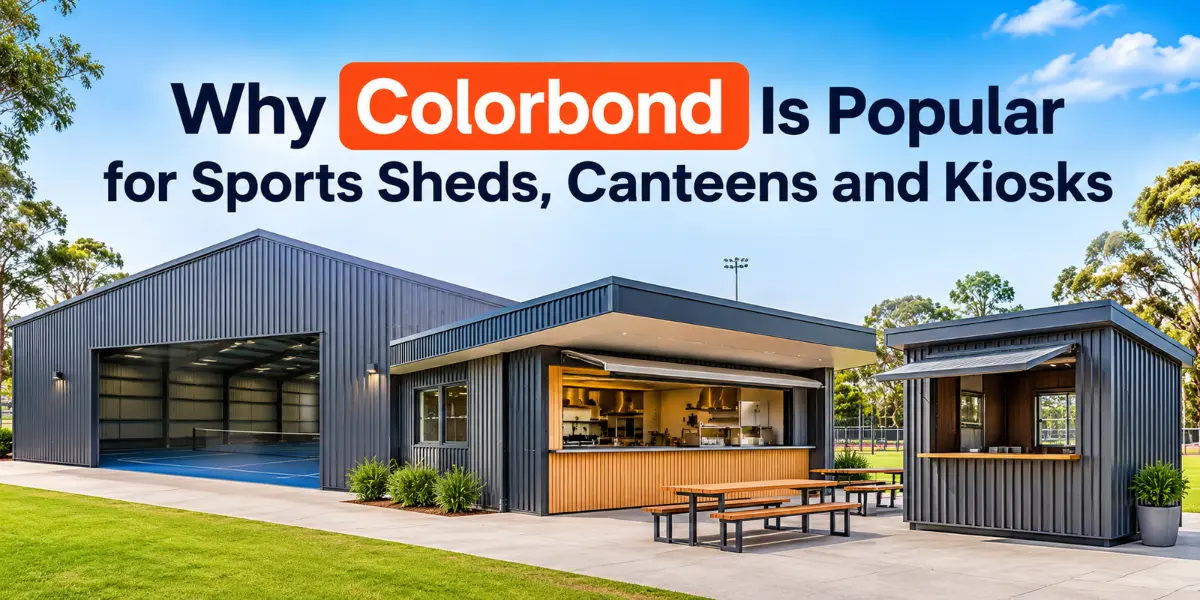
When you walk by most of your local ovals on a Saturday morning, you’ll find the same picture. There are kids wearing oversized jerseys, parents sitting in folding chairs, a long line at the canteen window, and a storage room full of goalposts, nets, cones, and lawnmowers. You’re unlikely to notice the roof covering everything; however, for many Australian clubs, schools, and community fields, that roof is made of Colorbond steel.
The reason for that is simple. These buildings (sports sheds, canteens and kiosks) are very hard working. They’re exposed to the harsh sun all day long, experience frequent severe weather events, have non-expert volunteers doing the majority of the work on them, and operate under strict financial constraints.
Therefore, they require a roofing product that is strong enough to withstand the elements, cost effective, and requires minimal upkeep. This guide will help you understand why Colorbond has emerged as the preferred choice of roofing material for these types of buildings; what factors you should take into account prior to selecting it; and how to achieve the most favorable outcome for your organization.
What Is Colorbond Steel?
Colorbond is a pre-painted steel product used for roofing and walls. It is manufactured by BlueScope. A protective layer of metal is applied to the steel substrate prior to being finished with a baked-on paint finish, which provides the Colorbond product with both color and additional weather protection. Colorbond is available in a large number of profiles such as traditional corrugated sheets and more contemporary flat profile options.
Because it is a factory finished product, the color and protection coatings are applied at a factory in a controlled environment instead of being applied on-site. The consistency of this application process has helped to make this product trusted by builders and roofers. This consistency also makes this product suitable for community buildings where they need to remain operational for years to come with minimal maintenance.
Why Sports Venues Need a Different Kind of Roof
Backyard garage roofs and club canteen roofs can be seen as having the same types of requirements. However, the requirement for sports facilities is different because of a number of unique factors which make material selection more critical.
constant exposure. open fields offer very little protection from the sun, wind, or rain. roofs of sheds and kiosks are subjected to the full force of the weather.
Heavy public use.The roof above the canteen will see heavy public use, with hundreds of people potentially standing under or near it on game days. A leaky roof, loose sheeting or faulty fasteners would create more than a nuisance for building maintenance staff, they would represent a potential safety hazard and damaged public image.
Community clubs usually do not hire professional facility teams. Their roofs will function well with occasional, easy maintenance.
Limited budgets. Many times, clubs use fund raising, grants, and club membership dues. What is more important than the cost of a quote for the roof is the value that will be received from the roof during its lifetime.
Fixed Event Calendars. Roofing work will be scheduled to avoid conflict with fixtures, tournaments, and training sessions.
Colorbond meets many of these demands effectively. This explains why there are so many grandstand covers, equipment sheds, canteens, scorer boxes, kiosks and change rooms made with Colorbond.
Strength and Durability That Suits Hard-Working Buildings
Steel has strength and this is important for a building which is going to be utilized each week of the season. Colorbond sheeting can handle foot traffic better during maintenance as opposed to some of the lighter materials. In addition, Colorbond sheets resist cracking and do not split like brittle products do when there are large temperature changes.
Colorbond roofing have been developed specifically to handle the harsh Australian climate. These include strong UV radiation, high summer temperatures, severe rainfall events, and unexpected strong winds. All of these factors can impact how well a Colorbond roof performs. When installed correctly, a Colorbond roof will allow for rapid drainage of rainwater and will withstand the force of most types of wind loads associated with smaller and medium-sized buildings, assuming that the appropriate fasteners and sheet overlaps were utilized.
There’s nothing wrong with being up front about the limitations. A large enough hailstorm can cause damage to all types of metal roofing systems. Also, if a roof has been poorly installed, it doesn’t matter what kind of roofing materials were used; that roof will simply not last long. Colorbond does have real strength, but how well the installation was done is what allows that strength to become a lasting product.
A Lightweight Roof That Keeps Structural Costs Down
In many cases, sports sheds and kiosks are constructed with basic framing systems, usually made from steel or lightweight lumber. Additionally, they may be built over current slab foundations or other forms of footings. If you plan to install a heavier type of roofing material (like concrete tile), then a more robust framing system will likely be needed. This will increase your project’s total cost.
- Colorbond is a lightweight roofing material. That means:
- Lighter loads on posts, trusses and footings
- Easier handling and faster installation
- Often a simpler, more affordable frame
- Less strain on older buildings being re-roofed
For many clubs who are replacing the roof of a worn-out shed or canteen, the reduced weight will provide another benefit. It is more cost effective to replace a roof than it would be to make major repairs to the existing structure.
Quick Installation Means Less Downtime
A canteen that has been closed for weeks does not generate revenue. A shed that cannot be utilized will force volunteers to keep equipment elsewhere that may not be as accessible.
Because colorbond sheets are light weight, long and produced to match custom sizes, the installation of these products is typically faster than that of other roofing materials. The installation of a typical small shed, kiosk or canteen roof can usually be done quickly. The length of time required for an installation depends on how large it will be, if there is adequate access to where the product needs to go, what kind of weather exists during the process, and the condition of the surface upon which the product will sit.
For clubs working on their roofs throughout the year, this is important. Many will plan to have the work done during an off-season or a slow time, when they can be sure the club’s building will be ready for the very first game. It’s so much easier for clubs to do business with a roofing contractor who communicates well and sticks to the schedule
Heat Management for Canteens and Kiosks
The heat in a tin box on a 38-degree day will make it feel like an oven very quickly if you’ve ever worked in a canteen. Heat is one of the most significant safety and comfort problems in small, commercial-type buildings with fryers, hot water urns, pie warmers and coffee makers operating.
Colorbond has several color options, some of which are lighter than others and therefore absorb less heat from the sun. In addition, there are Colorbond products with specialized technologies developed to increase the amount of solar radiation reflected by the product. Selecting a lighter shade of Colorbond for a kiosk or canteen roof is an inexpensive method for reducing the thermal load on the building.
The selection of colours is just a portion of what will help create truly comfortable surroundings. When making selections, please keep the following in mind:
- Insulation or sarking under the roof sheets to slow heat transfer
- Roof venting (i.e., turbine vents and/or ridge vents) allows warm air out of your home.
- Eaves and overhangs to shade walls and serving windows
In addition to causing damage to the roof, heat and moisture that are trapped can cause the roof to deteriorate at a faster rate, thus protecting both the occupants of the structure and the physical structure itself with proper ventilation.
Fire Performance and Safety
Safety is an essential consideration when designing any structure designed to host large numbers of people. One of the reasons Colorbond steel has become popular in areas with high risk of wildfires is because it is a non-flammable material. While the use of Colorbond steel does not guarantee a structure will be immune to wildfires (and is dependent upon the entire building system, its location and the appropriate Bushfire Attack Level), it provides an excellent foundation.
For both canteens and kiosks that contain cooking equipment, there is an added benefit to installing a non-combustible roofing material. You should always verify the requirements of your project with either your builder, your certifier or your local government, as there are many variations based upon the location and type of construction.
Colours That Match Club Identity and Council Requirements
Club Pride is very important. Sports organizations typically want to have their facilities reflect their club colors. They also typically want to have these facilities appear clean and uniform. Colorbond offers a wide variety of color options. It has light neutral colors as well as deep blue, green, red and charcoal colored options. Therefore, Colorbond is a great option for matching a clubhouse with a grandstand close by or even the natural surroundings.
Approval processes may depend on the color of your roof. Many local governments, heritage overlays and/or estate regulations require that your roof match the surrounding area. Since there are many different tested roof colors available, finding one that satisfies both the regulatory requirements and your aesthetic preferences should be relatively easy.
A few practical tips when choosing:
- Pick a lighter colour for heat-sensitive buildings such as canteens and kiosks.
- Consider glare if the roof is visible from stands, nearby homes or roads.
- Match the gutters and downpipes for a clean, finished look.
- Check council regulations prior to using a venue that is located within a sensitive or heritage listed area.
Coastal and Harsh Environments
The addition of a “salt” factor adds another layer of complexity to the challenges faced by surf clubs, seaside ovals, and coastal sports grounds. Salt-laden air accelerates the rate at which metal roofs and their fixings corrode, and if the incorrect product is used, its lifespan will be greatly reduced.
BlueScope’s Colorbond range of products have been developed specifically to withstand the harsher conditions of marine and industrial applications. In general, the warranty period offered by BlueScope will depend on the proximity of the facility to the coastline and the frequency of regular maintenance. Therefore, if your shed or kiosk is situated close to the sea, ensure that your roofer selects the appropriate Colorbond product and fasteners for your area. Additionally, regularly washing down the roof will help prevent salt from accumulating in areas which are protected from direct exposure to the elements.
In summary, while colorbond may perform exceptionally well in coastal areas, it is the specific product and how it is installed that will determine its success in these environments.
Good Value Over the Life of the Roof
When you sign the contract, Colorbond may not be the least expensive option. However, for organizations and communities, a more logical method of evaluating a roof is based upon how much money it will cost to maintain, repair, replace and lose time due to repairs throughout its existence.
Several things work in Colorbond’s favour:
- Lower structural requirements thanks to its light weight
- Faster installation, which reduces labour time
- Minimal ongoing upkeep compared with some other materials
- A long service life when installed and maintained properly
- A warranty from the company that made the item, with different length warranties depending on the specific item and where it is purchased.
Final costs vary depending upon the roof’s size and shape, as well as its accessibility, the state of the current structural system, the profile and color you select, and if insulation, gutter systems, or ventilation will be included. A reliable method for determining final costs is to allow a professional roofer to examine the building and then provide you with a written, itemized quotation.
Drainage Matters Just as Much as the Sheets
A surprising quantity of water may be shed by small buildings during a brief period of heavy rain. Water can flow over sidewalks, queue areas, and seats when gutters and downpipes are too small, or when they become clogged. Also, when water flows under the roof sheets, it can cause damage to the interior of the building.
For sheds, canteens and kiosks, good drainage planning should include:
- Correctly sized gutters and downpipes
- Proper fall so water moves away quickly
- Well-sealed flashings around penetrations such as vents, flues and exhaust fans
- Leaf protection where trees overhang the roof
Gutter guards can make the volunteer time spent cleaning out leaves much shorter if there are trees around your facility, and they can help prevent overflows when we have heavy rain.
Colorbond vs Other Roofing Options for Sports Buildings
Colorbond is used widely and may be seen as the “standard” option when choosing a material for your sports structure. However, there are many other options available, and comparing these can help show why Colorbond is the preferred choice for most small-to-medium-sized sports structures.
Tiles (concrete or terra-cotta): Tiles are aesthetically pleasing, long-lasting, but heavy and time consuming to apply. Typically tiles will work better on a house than a shed or kiosk.
Unpainted and lower quality metal sheets : Unpainted and lower quality metal sheets are often less expensive initially than higher quality, painted sheets. However, they can also provide a smaller selection of colors, and can perform differently over time, especially when exposed to harsh environmental conditions.
Polycarbonate or translucent sheeting:Polycarbonate or translucent sheeting is used to allow natural light to enter the covered area. It can be utilized with steel in place of being an entire substitute for the steel.
Membrane Systems: These systems have the ability to provide a smooth, continuous surface on either flat or low-pitch roofs. While these systems may be very effective under certain circumstances, they require a significantly different installation process than most other types of roofing.
Most sheds, canteens, kiosks and small grandstands find steel sheeting to be the ideal choice for their project. Steel sheeting offers a good combination of affordability, durability, rapid construction time and aesthetic appeal.
What to Check Before You Start
It’s wise to review the basics before starting on a roof project for a sporting facility.
Approvals. Contact your city council or certification authority to see what approvals are required. Additionally, there are other approval/safety regulations for canteens and kiosks that provide food.
The structure. Ensure that the framing, purlins and fasteners are in excellent working order. Any damaged or rusty components must be replaced prior to installing the new roofing material.
Insulation and ventilation.You will need to determine if you want your insulation and ventilation installed at the same time as the roof installation, as this will make planning for both simpler than adding either at a later date.
Safety plan.A professional roofer must develop a site-specific safety plan for each job site. This is particularly important when working in an area that can be accessed by the general public.
Timing. Complete work around existing fixtures and events. Off-season installation will most likely be the least disruptive.
Licensing & Insurance. Ensure your roofer has the necessary license, as well as public liability and worker’s compensation insurance.
Frequently Asked Questions
Is Colorbond good for a sports shed?
Yes, its many advantages such as its strength, light weight, ease of installation, and low cost of upkeep make it a common and functional option for sports sheds, storage areas, and equipment rooms. To ensure proper fit for each individual location, you need to select the right profile, fixings and installation process based on your site’s characteristics and wind patterns.
Is Colorbond suitable for a canteen or kiosk roof?
Yes, and it is also very popular to use the same technique to help keep things cool. Using lighter colors will assist in cooling down the area. Adding insulation and ventilation will make the environment more comfortable for the volunteers and staff who are preparing food. You should always consult with your local government and food safety regulations regarding your building.
How long does a Colorbond roof last?
Lifespan is determined by product type, coating used, local weather conditions, proximity to the sea and the amount of care given to the roof. When installed correctly and checked on a consistent basis, a Colorbond roof can last for several decades. On the other hand, roofs that are not cared for, or located in harsh marine environments where there are no products available to protect the metal from corrosion, will deteriorate significantly quicker.
Does Colorbond make the building hot?
Metal roofs will heat up when exposed to direct sunlight. However, by selecting a lighter color for your metal roof, installing insulation or sarking, and adding ventilation, you can drastically reduce the level of discomfort you experience. These three components should be planned simultaneously.
Can Colorbond handle hail and storms?
Colorbond will handle most of Australia’s average storm weather if it has been properly installed. Large hail can damage even the strongest of Colorbond sheet metal roofs. It would therefore be wise to have your roof inspected after every major storm.
Do I need council approval to re-roof a shed or canteen?
If you are simply replacing an existing roof with a direct replacement (like-for-like), then you generally will not require approval. However, if you plan to alter the height/line of your roof, change its size, use or location, then you may well require approval. Additionally, if the property is located within a heritage area, or used by the public, there could be additional regulations that apply. Before beginning any work on your roof, you should contact your local council or certifier to confirm what requirements apply.
How much does a Colorbond roof cost for a small sports building?
Prices for a project cannot be given as one amount. The reason for this is that prices are based on several factors including: how large your home is, what kind of roof you have, if you can access your roof easily, the type of materials used in your project, whether you plan to install insulation, whether you will need new gutters, and the overall condition of your roof’s structural support. A free site visit and written estimate are the only ways to find out what your project will actually cost.
How often should a Colorbond roof be inspected?
A reasonable time frame for roof inspections is once or twice per year and also following a large storm or hail storm. Regular inspection allows homeowners to find loose fasteners, rusty areas, plugged gutters and deteriorated sealants before they cause a leak.
Final Thoughts
Colorbond is a popular choice for sports ground facilities in Australia because it offers many advantages. Colorbond is very durable, lightweight, installs quickly, is sold in a variety of colors, and requires little maintenance. This combination makes Colorbond an ideal option for clubs, schools, and local governments who want to protect their sheds, canteens and kiosks within a budget.
The best performance is achieved by matching the correct product to the correct installer: using appropriate fasteners; providing adequate drainage; allowing for proper ventilation; and planning for future maintenance. If you follow this approach your roof will work silently every year while everyone else watches the game.
Prestige Roofing Solutions can provide you with a free, no obligation inspection of the existing roof on your club, school or venue in Sydney. After the inspection has taken place, we will then prepare a written quotation for the required repairs, re-roofing or installation of a new roof. This allows us to ensure that there are no surprises when it comes time to pay for the work completed. To arrange an appointment for an inspection, please contact either our team or call us at +61 407 462 014.